Book Reviews

Book Review: The Kaerling

A46099D5-D9A9-4C77-A8BE-7EA824D64FCB

Synopsis

When Otta and Erl are banished from their village for angering the gods, they embark on a peculiar quest.

Commanded by a wandering god, Otta is obliged to follow the strange, elusive “unicorn’s trail.” Her twin brother, Erl, has lost his memory and is struggling to discover who he is and where he is.

As they travel further from the shelter of the Homestead, the siblings discover unpleasant traits in their personalities. They must learn to adapt and change before they are driven apart.

Who is the wandering god? Just what is the “unicorn’s trail” and where will it lead? What are the kaerlings? And who are the brown-robed travellers that trespass in Otta’s dreams?

Review

Read: Summer 2019

Rating: 1.5 stars out of 5

A few months ago, I received an email from Freya Pickard asking me to review the first book of her Kaerling series. I’m ashamed that I didn’t complete this review much sooner, but ya know how life happens and ya get really busy. Anyway, I’m flattered that Ms. Pickard reached out to me to request a review.

In my reviews, I strive to adhere to the policy of honesty, and the honest truth is that I am unimpressed – and often befuddled – by Silver Fire. The story itself could be interesting, but it’s weighted down by a variety of issues. For one thing, the writing is choppy. Not only are the sentences often stilted-sounding; Pickard also has a tendency to throw in details where they aren’t really pertinent. In fact, those randomly placed details don’t shape the setting enough to prevent the reader from feeling like they’re just… watching a flipbook. There isn’t much buildup to plot events, either. Stuff simply happens very suddenly. My biggest beef, however, is with Erl’s amnesia. I get that amnesia is not always a blanket blackout, but I don’t get why Erl remembers one thing but forgets something else even though the thing he forgets is related to the thing he remembers. The best example: His concept of human decency is intact enough for him to sympathize with an ethnic minority and defend their right to live in their native land, but not enough for him to remember that attempting to rape anyone – especially the girl who insists that she is his twin sister – is a mega no-no. His priorities when he apologizes to her later are completely out of whack too. “This incest thing seems important to you so I’ll stop” doesn’t strike me as the first thing someone who has committed sexual assault against their sibling should say to said sibling; what they should say is more along the lines of “oh my god, I’m sorry I tried to rape you and I understand this not-being-raped thing is important to every human being so I’ll stop”. This whole incest/sexual assault ordeal adds nothing to the plot of the story; instead, it serves as just a giant what-the-fuck dead-end subplot. 

What I can say for Silver Fire is that I wasn’t bored while reading it. Whether that was because of the fast-paced plot, sheer curiosity, or the potential of the story itself, I really couldn’t tell you. Maybe it was all of the above. In any case, I’ll probably try reading the next installment of The Kaerling, just for kicks. 

Image and synopsis are from BarnesandNoble.com.

Book Review: The Storm Crow

34F71E03-57AD-406E-AB56-302316A985EA

Synopsis

In the tropical kingdom of Rhodaire, magical, elemental Crows are part of every aspect of life…until the Illucian empire invades, destroying everything.

That terrible night has thrown Princess Anthia into a deep depression. Her sister Caliza is busy running the kingdom after their mother’s death, but all Thia can do is think of all she has lost.

But when Caliza is forced to agree to a marriage between Thia and the crown prince of Illucia, Thia is finally spurred into action. And after stumbling upon a hidden Crow egg in the rubble of a rookery, she and her sister devise a dangerous plan to hatch the egg in secret and get back what was taken from them.

Review

Read: July 2019

Rating: 3 out of 5 stars

It’s difficult not to have high hopes for a book with such a breathtaking cover and such a propitious premise. When my expectations are so lofty, the disappointment when a book fails to meet them is all the more disheartening. 

That’s not to say there’s nothing to like about Kalyn Josephson’s debut novel. For her story, she has clearly crafted a colorful setting with rich backgrounds. At the end of her novel, Josephson even provides two brief appendices: one summarizing the culture, politics, and economics of each country; the other covering information on the magical crows of Rhodaire. I’m an incurable sucker for this kind of stuff because it indicates that the author really exerted a considerable amount of effort creating their setting and that they bothered to think outside the box. So those of you who enjoy lore-laden worlds might appreciate this. 

Josephson also writes a diverse cast of characters in terms of race and sexuality. Anthia, the protagonist, is heterosexual and brown-skinned. Her sister, Queen Caliza, shares her skin tone but is bisexual (or pansexual, perhaps?) and is wed to the black prince of Trendell, Kuren. Thia’s best friend, Sakiva, is hella pale and hella lesbian, and her romance with Auma, a young Asiatic woman who happens to be a Jin rebel spy posing as a servant in Sordell’s palace, is a prominent subplot. It’s even implied that Thia’s mother is also LGBTQ, and the same-sex partners of a few other characters are referenced. Through Thia, Josephson tackles another aspect of diversity: mental health. If the idea is reminding depression sufferers that they are not alone, two facets of solidarity need to be addressed. Representation is easy enough to pick out, particularly with Josephson’s wise use of first-person narration. A significant portion of the story focuses on Thia’s healing process as she grapples with debilitating depression, a psychological wound stemming from the attack on Negnoch. Although Thia faces some stumbling blocks as the story progresses, she eventually finds the strength to get back on her feet. Knowing that other people wrestle with mental health is a step, but it’s also vital that people feel that they can connect with and rely upon others. Just as important as Thia’s struggle is Kiva’s support. Stalwartly loyal and empathetic, Kiva is the kind of friend that everyone should have. Instead of withdrawing from Thia when she needs her most, Kiva stays by her side, a reminder that friends will not abandon you because of a mental health struggle.

The shortfalls of The Storm Crow truly diminish what could have been a mighty story. In stark contrast to the in-depth world-building, the plot itself sports a detail deficit. For instance, Thia concocts an acid to dissolve an iron lock on a door guarding a room full of crow eggs. There’s no real description of Thia learning how to do this beyond “I decided to help Caylus make this random acid and put on some leather gloves”. Hell, neither the acid nor the ingredients are even given names. Although this might seem like a petty complaint, the use of this acid is rather important to the plot, and it strikes me as lazy to not put more effort into the setup of the plot device. The detail void sucks away the story’s life even as the plot moves forward unhindered by description. The result is a pace that is simultaneously sluggish and rushed. 

Character arcs too suffer when details are scant. Fewer details often mean fewer opportunities to explore characters thoroughly without resorting to infodumps. For some characters, Josephson executes arcs quite well. Ericen and Razel both have strong storylines: Razel’s background, discussed in several conversations, elucidates her motives for her cruelty; Ericen’s actions throughout the book illustrate a conflicted character with a desire to do the right thing. Other characters’ stories are not so skillfully carried out. Caylus in particular stands out as an example of this. The concept of him is adorable, but despite his devastating backstory, he’s still rather flat. Interactions involving him divulge something new about him much less often than they reveal nothing about him. Auma’s arc is hurried and thus has a shallow sort of feel to it; however, I grant more leniency in this case as Auma is meant to be mysterious and Josephson would be unlikely to show much of her hand in the first book of a series for such a character. 

The Storm Crow isn’t a bad book. It’s no masterpiece either. It certainly isn’t good enough for me to want to read it again, nor is it disappointing enough for me to not read the next installment of the series. I mean, come on, there’s an embattled prince whose fate I need to follow and a gazillion crow eggs that need to be rescued. There’s no way I can’t at least try the next book.

Image and synopsis are from BarnesandNoble.com.

I’m Back!

Helllllloooooo!

Wow, it’s been three months since I last posted a review. Things have been super busy for me: two summer classes, vacation, a root canal, job hunting, and flute rehearsals are just some of the events that have kept me so occupied. Also, one of the reviews I’m working on is on a particularly weighty topic, and I want to make certain that tackle that task from the right angle. And finally, I will admit that a close friend of mine encouraged me to read The Way of Kings by Brandon Sanderson, and I decided I needed to read something not necessarily to review it, but just to enjoy myself. Unfortunately (but also fortunately), TWoK is 1,258 pages long, so you can imagine what an undertaking that is.

I have a review ready to be posted today. Here are other reviews to keep an eye out for in the next couple of weeks:

  • Silver Fire (The Kaerling, Book One) by Freya Pickard. Ms. Pickard actually contacted me awhile back and asked me to review her work, which was quite flattering. I’m ashamed that it’s taken me this long to complete that review, but I promise, I’ve been working on it. Expect my review next week.
  • Sorcery of Thorns by Margaret Rogerson.
  • The Women’s War by Jenna Glass.

Thank you all for reading – whether you’re perusing my reviews or a book from your local library.

-Jamie

Flash Review: Two Dark Reigns

130E333D-AE37-4FEC-8251-6C66C40BE40A

Read: April 2019

Rating: 4.75 stars out of 5

*Spoiler alert!*

This series gets better with each book.

This installment of Three Dark Crowns really highlights the amazing character arcs Blake writes. Arsinoe is as strong-willed as ever, much to the annoyance of her mainland host (boyfriend Billy’s mother), and once again that obstinate determination propels Arsinoe’s storyline. This time she’s headed back to Fennbirn, with a series of mysterious dreams as her sole lead. Mirabella and Billy love her too much to just let her do that on her own, though, so they’re coming whether she likes it or not. Meanwhile, Katharine is finally regaining some of her own personality, but the dead queens still lurk beneath her skin and stir up trouble. When the mist that enshrouds the island turns on the people of Fennbirn, Pietyr can only deduce that the dead queens are to blame. Fearing for the safeties of both Kat and the island, Pietyr steps well outside of his comfort zone to find a solution. All this occurs against the backdrop of an incipient yet powerful insurgency gaining steam throughout the island – an insurgency centered around Jules Milone, the Legion Queen, who is still trying to come to terms with her dual gifts and the yoke of leadership that’s being foisted upon her.

A number of times throughout this book I found myself beginning to like a character that I was once mostly indifferent to or previously hated. Mirabella started out as just “okay” in Three Dark Crowns because I viewed her as a sap and a source of drama. By this point, however, she has more than proven herself to be a strong young woman and probably one of the nicest and most loyal people in the series. Her friend Bree Westwood has evolved from superficially boy-crazy rich girl to burgeoning politician who definitely knows how to drive a bargain. And while Pietyr started out as an unctuous asshole, he’s shown that he truly loves Kat and wants what’s best for her, and that like his aunt Natalia, he possesses a great deal of political finesse. Multiple times he endangers himself for Kat’s well-being, even though that eventually costs him his life. By the end of Two Dark Reigns, even Madrigal had grown on me. As she tries to make amends with those she has wronged, Madrigal demonstrates that she’s not just a shallow, vain woman, that she actually has a heart. It’s quite fitting that Pietyr turns to Madrigal for aid in exorcising the dead queens from Katharine, because like Pietyr, Madrigal pays for her love with her own blood. In the end, she really steps up to her chance to shine as a mother, even if she’s not a maternal person.

Although the book is slow at times, most events are interesting enough to compensate for any dragging of the pace. Even though much of Two Dark Reigns centers on Jules’s rebellion, the action isn’t so much physical combat as it is traveling, discovery, and emotional development; the biggest enemy in this book – the mist – isn’t something that can simply be chopped, punched, or poisoned away. Like Game of Thrones, the conflicts that arise in the Three Dark Crowns series are often better solved via political or intellectual means as opposed to brute force – something I absolutely love. The twist at the end of the book is completely shocking, and I was not prepared to hear that Mirabella has to die to save Fennbirn from the mist. I’m really hoping that clever Arsinoe finds a way to save both Mirabella and Jules, but how often do we readers actually have wishes like that granted?

I’ll be preordering Five Dark Fates for sure. September can’t come soon enough!

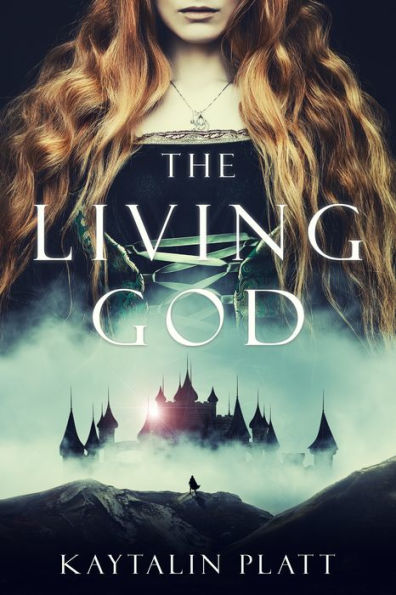
Book Review: The Living God

E43BDD1F-C76F-4711-9A71-A282EEC235C0

The Blurb

Saran and Keiler are elemental mages bound by love and sorcery: one destined to rule a kingdom, the other to destroy it. Five years ago, Saran reached into Keleir Ahriman’s heart and imprisoned the demon within him, tying her soul to his. Together, they’ve conspired against Saran’s father—a fanatical king who worships that world-ending demon inside Keleir, a being known as the Vel d’Ekaru. When Saran risks everything to save a village of innocent people, the king rips her magic away, splintering the wall she built around Keleir’s heart. Powerless and desperate, Saran struggles to see her rebellion finished and stop Keleir from becoming the Vel d’Ekaru – the Living God.

In a world that is equal parts magic and political intrigue, heroine and hero must now battle their way back to each other if they are to overcome their doomed destinies.

Review

Read: April 2019

Rating: 1 star out of 5

*Thank you to NetGalley for the free digital ARC!*

I probably should have known this book would be awful just by the first sentence of the blurb. Instead, I tried to be optimistic. Sometimes, hoping for the best pays off, but this time I was just disappointed. The Living God is just another book to add to my “Did Not Finish” shelf on Goodreads.

Chief amongst this book’s problems are its sucky characters. Saran is a gorgeous Time Mage who is engaged in a supposedly consequential rebellion against her father, the despotic yet sickly King Yarin D’Mor of Adrid. While Saran is strong-willed, just being involved in a rebellion against her dad isn’t enough to convince me she’s a badass. Her lover, Keleir Ahriman, is a Fire Mage who is esteemed by King Yarin. Since birth, Keleir hosted a demon called the Oruke, which is apparently also called the Vel d’Ekaru. Prior to the demon’s containtment – courtesy of the lovely Saran – Keleir committed terrible things with the demon. As a result, he bears the heavy yoke of guilt, and that makes him broody to an obnoxious extent. Between the fire affinity, the tenebrific disposition, and the stupid overprotective shit he does, he’s basically the bastard child of Edward Cullen and a garbage version of Prince Zuko. Rowe Blackwell is Keleir’s less interesting brother who somehow escaped the curse of the Oruke, despite the fact that Keleir was born with the curse. How this happened is unclear to me – either because the author never explains it or because I gave up before she did. And finally there’s Odan Marki. A commander or some shit in the Adridian army, he serves as the sexual predator antagonist who makes completely inappropriate advances on Saran, such as skulking around on her balcony to peep at her through the windows or attempting to extort her into sex. In contrast to Saran’s Fire Mage lover, Marki is an Ice Mage. Because that’s not at all cliché.

The beginning of the book is decent: It opens with an action-packed scene playing out in reverse as Time Mage Saran – who also happens to be the princess of Adrid – uses her powers to save a village of innocent people from slaughter at the hands of her father’s army. But an adequate start does little for a book if it’s the high point. By page forty-five, I thought of sloughing through all three hundred sixty-eight ass-damned pages with the consternation I usually reserve for large homework projects. The excitement of the opening scene fizzles out by Chapter Two, and it doesn’t return. Despite the rebellion’s status as a purportedly high-stakes conspiracy, nothing interesting really happens with it. In the portion I read, the most intriguing thing that happens involving it is Odan Marki discovering a rebellion-related letter in Saran’s room and then using it in an attempt to coerce Saran into fucking him. Yuck. I find it problematic that the attempted sexual assault is one of the more riveting (albeit one of the most horrific) points of the book. That’s just a low bar to set on so many levels. And all the fascinating potential of time/dimensional travel is wasted when Platt spends an entire fucking chapter on Saran and Keleir just… riding carnival rides. Yeah.

Platt’s writing is long-winded, but not in the charming way that J.R.R. Tolkien’s is. While Tolkien actually establishes his characters and universe in his monologues, Platt does not. Instead all I get out of her ramblings are tidbits about what color the curtains are. The details you do get are the details you do not care about or want to know at all. Consider, for instance, this sentence: “The full dining hall had long tables with men and women seated at them, eating the morning meal.” This detail is not presented in a manner that fleshes out the scene of a story; it’s just thrown in and sits awkwardly in the paragraph. If there is anything I want to know about the story, it’s nothing to do with the dining hall. I’d much rather know the name of this demon inhabiting Keleir – something that isn’t mentioned until well past where I called it quits. Then there’s this bit:

The wrestling ended with Saran mounted atop him, riding along a wave of ecstasy, while Keleir withered beneath her. He sought handfuls of flesh, and his mouth traced wet lines across her chest.”

Um, ew. Do I want to break this down? Of course I do. First off, if a lover ever told me that he wanted to grab “handfuls of flesh”, I’d immediately dump him and promptly alert the FBI of a potential serial killer. Also, don’t just say stuff like “his mouth traced wet lines across her chest” and then say pretty much nothing else before the simultaneous orgasms. That information floating on its own is plain gross. And is Keleir’s “withering” a recurring problem? Are you telling me that these people can contain parasitic world-eating horrors and travel between dimensions but can’t treat erectile dysfunction?

Just save yourselves some time and boredom, folks. Don’t read it. Just don’t.

Cover image and blurb are from BarnesandNoble.com.

Checking In…

Hey, guys! Thanks for stopping by. Here’s a quick update.

Finals week is a bitch, and prepping for it has been a lot of work. I had three papers/projects due last week alone! But this blog has helped me get those things done. You, my readers, have helped me get those things done.

No, really.

Let me explain. Feeling confident in my writing is something I’ve struggled with for a long time – and so much so that it’s crippled me in school over the years. One of my motives for starting this blog was increasing my confidence about writing and publishing something. Apparently, my plan worked. I was able to turn in all three things and feel okay about them, even though I was in a time crunch. Damn, that felt like a monumental accomplishment. Thank you for your support, guys.

As far as what’s coming up, here’s what you can expect. My summer semester begins immediately next week, but that also means exams will be done this Friday! By then, I hope to have a review of The Living God posted. Next week, I want to have a review of Wild Sun posted. Also in my queue are The Phantom Forest, Re-Bisoning the West, and The Rise of Wolf 8. I don’t want to do two non-fiction book reviews in a row, so I’ll probably find something a little less attached to reality to pad the space between. 🙂

Until next time,

Jamie

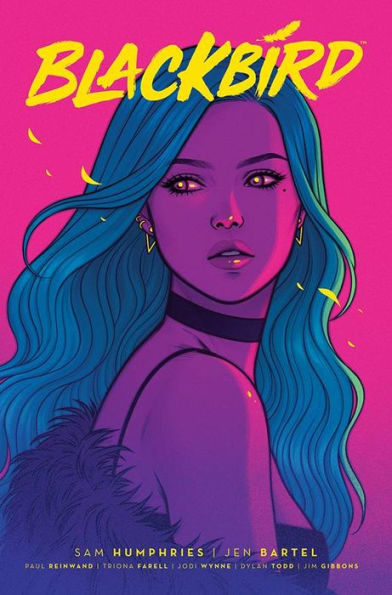
Book Review: Blackbird, Volume 1

F1B99D42-ECB4-44D9-A0CB-A3F444ACB4CB

The Blurb

Nina Rodriguez knows there’s a hidden magical world run by ruthless cabals hiding in Los Angeles. And when a giant magic beast kidnaps her sister, Nina must confront her past (and her demons) to get her sister back and reclaim her life. Perfect for fans of SYFY’s The Magicians, CW’s Riverdale, and THE
WICKED + THE DIVINE
, don’t miss the first collection of the smash-hit neo-noir fantasy series from fan-favorite writer SAM HUMPHRIES (Harley
Quinn, Nightwing) and red-hot artist JEN BARTEL (Black Panther, Mighty
Thor)!

Review

Read: April 2019

Rating: 3.5 stars out of 5

*Thank you to Edelweiss+ for the free digital ARC!*

*Spoiler warning!*

It’s worth noting that this is an ARC in the sense that it’s not yet been released in this bind-up format. (The content of Blackbird, Volume 1 has already been released.) Still, this is my first time reviewing a graphic novel ARC, so it’s nevertheless a cool experience. Blackbird isn’t the best graphic novel I’ve read (I’m trash, the ATLA graphic novels hold a special place in my heart), but it’s certainly enjoyable.

Art style heavily influences my opinions of graphic novels. Earlier this year I read a graphic novel adaptation of Octavia Butler’s Kindred, and although I understood the purpose of the story, the art style prevented me from truly appreciating it. Blackbird circumvents that problem with its skillfully rendered art. Its art isn’t just not so terrible or weird that it detracts from the storyline; it’s actually good. If I’d known who the artist was before I read this, my expectations would have been higher and I’d have been moderately less surprised by the quality of the illustrations. Best of all, the illustrations are in color – something that, after reading black-and-white manga for so long, I didn’t realize I missed until I started reading Blackbird.

Blackbird chronicles the adventures of some interesting characters. I’m a sucker for cats, so I of course adore Sharpie and care about him more than any of the human or Paragon characters. Clint is pretty much the stereotypical flirt with a golden heart and a scheming father. I’m curious to see how he’ll decide to play his cards in the next installment. Despite her tendency to be a little petulant, Nina is nonetheless portrayed as a complex character with a pregnant development arc. As she grapples with poverty, addiction to painkillers, and a broken family, Nina sets off on a journey to seize back control of her life as much as to rescue her sister, Marisa, with whom she has a complicated relationship. If I’m being honest, Nina’s character arc intrigues me more than any aspect of the Paragon world – excepting Sharpie, obviously.

The world the authors have constructed is fluorescently dazzling, but on some level it feels shallow. Occasionally it felt like they skimped on important events, causing those events to feel anticlimactic. Even when details are plentiful, the solutions to problems are often too simple given the storyline and what is known about the universe. In particular, Nina’s initiation as a Paragon is way too… comfortable, considering the horrific deaths that most of the other Paragons had to undergo. I mean, yeah, she was already sort of initiated partially after she died in the earthquake, but still, her full initiation is, perhaps fortunately dull.

All in all, Blackbird is an amusing read, even if it sometimes errs on the side of superficial. If you’re into urban fantasy like Shadowhunters, this might be a good graphic novel to try.

Cover image and blurb are from BarnesandNoble.com.

Book Review: Grace and Fury

9780316471411_p0_v1_s600x595

The Blurb

Serina Tessaro has been groomed her whole life to become a Grace–someone to stand by the Heir to the throne as a shining, subjugated example of the perfect woman. It’s her chance to secure a better life for her family, and to keep her headstrong and rebellious younger sister, Nomi, out of trouble. But when Nomi catches the Heir’s eye instead, Serina is the one who takes the fall for the dangerous secret her sister has been hiding.

Trapped in a life she never wanted, Nomi has only one option: surrender to her role as a Grace until she can use her position to save Serina. But this is easier said than done…. A traitor walks the halls of the palazzo, and deception lurks in every corner.

Meanwhile, Serina is running out of time. Imprisoned on an island where she must fight to the death to survive, surrounded by women stronger than she is, one wrong move could cost her everything. There is no room for weakness on Mount Ruin, especially weaknesses of the heart.

Thrilling and captivating, Grace and Fury is a story of fierce sisterhood, and of survival in a world that’s determined to break you.

Review

Read: April 2019

Rating: 2.75 stars out of 5

*Spoiler warning!*

Without a doubt, Grace and Fury is feminist. Not only does it focus on sexism perpetrated by men against women, but it also, through the training and lives of Graces, explicitly spotlights the intra-gender competition that exists between women.

But being “feminist” doesn’t automatically net a rave review for a book. While Banghart’s point is exceedingly perspicuous, her execution is pretty humdrum.

The writing style leaves something to be desired. Banghart spends way too much time discussing sartorial choices. Such a decision might have been made to underscore the role that vanity plays in this society. Unfortunately, describing characters’ apparel at points where doing so adds nothing to the story is more disruptive than effective when it comes to driving such a point home. A thesaurus might also have been helpful, since the word “fury” appears about a million times. Banghart’s repetition of the word “fury” lends the impression that she’s trying too hard to explain her title when no explanation is really needed.

This story just doesn’t stand out creatively. The general plotline of “women are oppressed/get sexist bullshit and decide to fight back” can be a very compelling one, but Banghart fails to explore a truly unique iteration of that. Viridia does not distinguish itself as a noteworthy setting. Basically it’s just a super sexist version of Italy, I guess. Furthermore, its history is purposely hazy, but this hinders rather than assists the revelation of the true past, which is anticlimactically presented in the form of an infodump. With little known about Viridia aside from its enforcement of rigid gender roles, the divulgence of the country’s revised history just doesn’t pack the punch that it ought to.

The prosaic characterization drains life out of the story. Nomi is painfully gullible, Asa is an obsequious scum weasel, and Malachi is only slightly livelier than a yardstick. Though I appreciated Val, Renzo, and Maris, their characters are not fully explored (perhaps because Banghart is saving that for the sequel to Grace and Fury). Nomi’s character arc stands in stark juxtaposition next to Serina’s much sturdier one – a weakness that drags down the story, since half of the book is about Nomi’s experiences.

As is often true, flat characters make for dull romances. Val and Serina are a cute couple, but their affair isn’t exactly the most gripping I’ve ever read. Nomi’s romances, on the other hand, are just tedious. Long before Banghart revealed Asa’s perfidy I disliked him because he’s so patently untrustworthy, and although Malachi is more pleasant company, he’s insufferably stodgy. Even though I’m almost positive that Nomi will end up with Malachi, I don’t care much beyond being bored with Malachi and Nomi, whether they’re alone or together.

Overall, this book was shallowly entertaining. I liked Serina’s character and am curious enough about Ines’s position that I’ll probably read the sequel, but I’m not exactly on the edge of my chair in anticipation or ready to fork over money to read it immediately upon its release. Hopefully Banghart will seize upon the vast room for improvement and the next book will be more than just mediocre.

Cover image is from BarnesandNoble.com.

Book Review: As Long as Grass Grows

9780807073780_p0_v1_s550x406

The Blurb

Through the unique lens of “Indigenized environmental justice,” Indigenous researcher and activist Dina Gilio-Whitaker explores the fraught history of treaty violations, struggles for food and water security, and protection of sacred sites, while highlighting the important leadership of Indigenous women in this centuries-long struggle. As Long As Grass Grows gives readers an accessible history of Indigenous resistance to government and corporate incursions on their lands and offers new approaches to environmental justice activism and policy.

Throughout 2016, the Standing Rock protest put a national spotlight on Indigenous activists, but it also underscored how little Americans know about the longtime historical tensions between Native peoples and the mainstream environmental movement. Ultimately, she argues, modern environmentalists must look to the history of Indigenous resistance for wisdom and inspiration in our common fight for a just and sustainable future.

Review

Full title: As Long as Grass Grows: The Indigenous Fight for Environmental Justice, From Colonization to Standing Rock

Read: March 2018

Rating: 4.75 stars out of 5

Thank you to Edelweiss+ for the free digital ARC.

“If what the preeminent Indian law scholar Felix Cohen said was true, that Indians are the United States’ miner’s canary that signals the poison gas of the political atmosphere, to extend the metaphor, then in the larger world dominated by the fossil fuel industry all humans have become the miner’s canary… From an American Indian perspective, we’re all on the reservation now.”

-Dina Gilio-Whitaker, As Long as Grass Grows

When you sit down with As Long as Grass Grows, be prepared for some serious introspection.

Reading this book was difficult because as I read, my own naivety and ignorance – willful or otherwise – hit me again and again. I knew that white settlers had systematically and violently oppressed the Native American population, but I never really understood the exact extent this cultural squashing reached. After reading that Native Americans were enslaved by white settlers and being subsequently shocked by that fact, I then wondered why it never occurred to me that such a thing happened. It never dawned on me that the disappearance of the bison was more than just human – or more accurately, settler – carelessness pushing the bounds of nature’s resilience – that instead it was the result of an intentional extirpation of this majestic animal and valued food source by the American government in an effort to further subjugate Indigenous peoples. Nor did I ever really stop to think about how colonialism disrupted the diets of Native peoples and the deleterious effects it wrought upon their cultures and health.

The environmental injustices suffered by Native Americans have yet to be relegated to antiquity: They’re an ongoing problem – a problem that, as Gilio-Whitaker argues, is the progeny of the American government’s horrific history with Native peoples.

Gilio-Whitaker dispels the notion of a peaceful history between environmental groups and Indigenous peoples. Once environmental groups were powerful forces driving Indigenous displacement; later they would co-opt the Native American for their own purposes. These transgressions are part of an ugly past, and those of us in the environmental movement need to acknowledge them and take steps to mend what’s been broken.

Clearly, there is much room for progress. But that doesn’t mean there’s been none to speak of. Gilio-Whitaker cites the Keystone XL and Standing Rock protests as examples of coalition-building, despite their flaws. The keys to bettering relations with Native peoples and achieving environmental justice with them are that those of us who are “settlers” become more cognizant of our privilege and the harrowing story of how that privilege was established and enshrined into law, confronting the resultant biases and prejudices we hold, and recognizing the agency and sovereignty of Native American peoples.

Cover image is from BarnesandNoble.com.

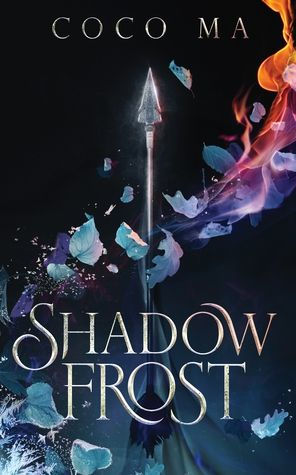
Book Review: Shadow Frost

E1F860AF-DD7A-4495-99C0-0E8CE8739740

The Blurb

In the kingdom of Axaria, a darkness rises.

Some call it a monster, laying waste to the villagers and their homes. Some say it is an invulnerable demon summoned from the deepest abysses of the Immortal Realm. Many soldiers from the royal guard are sent out to hunt it down. Not one has ever returned.

When Asterin Faelenhart, princess of Axaria and heir to the throne, discovers that she may hold the key to defeating the mysterious demon terrorizing her kingdom, she vows not to rest until the beast is slain. With the help of her friends and the powers she wields-though has yet to fully understand-Asterin sets out to complete a single task. The task that countless trained soldiers have failed. To kill it.

But as they hunt for the demon, they unearth a plot to assassinate the princess herself instead. Asterin and her friends begin to wonder how much of their lives has been lies, especially when they realize that the center of the web of deceit might very well be themselves. With no one else to turn to, they are forced to decide just how much they are willing to sacrifice to protect the only world they have ever known.

That is, of course, if the demon doesn’t get to them first.

Review

Read: April 2019

Rating: 2 stars out of 5

Thank you to Edelweiss+ for the free digital ARC! 

*Mild spoiler warning.*

I really had high expectations for Shadow Frost. The synopsis held so much promise. And the cover – oh, it’s just gorgeous!

Sadly, this book wasn’t the vaulting champion I anticipated. I actually didn’t even finish it. You know how some books are so atrocious that you forge on because the whole thing is so laughably dreadful? Not the case with this book. It was just so mediocre that I couldn’t even chuckle over its absurdity.

Don’t get me wrong. There were things that I liked. The world-building was pretty solid, and I enjoyed Orion and Asterin’s and Asterin’s and Luna’s friendships (okay, I enjoyed the latter until the end of the book), as well as Luna and Eadric’s relationship. Unfortunately, the characters themselves were quite bland – and Ma had plenty of opportunity to develop them, given that just about everyone was a viewpoint character at one time or another. Without that crucial characterization, the characters seemed more like the vaguely described players in old fairytales: They were there and they were somewhat entertaining, but I never really felt connected to them. Instead of existing in their own rights as distinct individuals, the characters merely functioned as plot devices. Some of these characters were just jackasses – particularly Quinlan, who apparently thought it perfectly acceptable and safe to crash through Asterin’s window just to show off a baby bird that he’d found. Like, what a shithead. And he’s the love interest?? And like The Crown’s Game, the protagonists were way too powerful. One being omnifinitied would’ve sufficed, but two or three pushed the line from cool to cheesy.

The plot itself was inane and formulaic, and even the “twist” was way too easy to predict. (Yes, I read the end. Guilty.) By the time the fight at the Rainbow Salmon Inn concluded, I was getting the distinct impression that much of the action would just be Quinlan Showing Off™. Also, some of the grand plans didn’t make a ton of sense, like evacuating all the occupants of the inn except the princess heir, who was then imprisoned in her room as a wyvern monster tore gaping holes in the walls of the inn.

Perhaps worst of all was the uneven pacing. Take, for instance, the first sixty-seven pages in the book. Much of it focused on introductions, Asterin and Priscilla engaging in tense interactions, and sparring. While I understand that a good story demands a good exposition, so much of this content was just vapid filler. Ma could have eliminated at least fifteen pages and still been able to include the important events and grant her readers adequate background information. Then, once page sixty-eight hit – bam! – three dozen guards were dead and the heroes had to take action to eliminate their killer. The ensuing debate over who else to send on the mission proceeded to consume way more page space than it should have. Quinlan got to show off, and he secured his spot on Team Hero.

What started out with so much potential quickly stultified me. With final exams and project deadlines approaching, I deemed continuing on to just not be worth it. I have neither the time nor the tractor to deal with this overabundance of corn.

Cover image is from BarnesandNoble.com.