
 Synopsis
Thrust into leadership upon the death of his emperor father, young Prince Ahkin feels completely unready for his new position. Though his royal blood controls the power of the sun, he’s now responsible for the lives of all the Chicome people. And despite all Ahkin’s efforts, the sun is fading—and the end of the world may be at hand.
For Mayana, the only daughter of the Chicome family whose blood controls the power of water, the old emperor’s death may mean that she is next. Prince Ahkin must be married before he can ascend the throne, and Mayana is one of six noble daughters presented to him as a possible wife. Those who are not chosen will be sacrificed to the gods.
Only one girl can become Ahkin’s bride. Mayana and Ahkin feel an immediate connection, but the gods themselves may be against them. Both recognize that the ancient rites of blood that keep the gods appeased may be harming the Chicome more than they help. As a bloodred comet and the fading sun bring a growing sense of dread, only two young people may hope to change their world.
Rich in imagination and romance, and based on the legends and history of the Aztec and Maya people, The Seventh Sun brings to vivid life a world on the edge of apocalyptic disaster.
Review
Rating: 2.25 stars out of 5
Read: October 2019
It’s so satisfying to see a fantasy novel with a non-European setting. The representation isn’t the only thing to cheer about, though: There is a bevy of fantasy books written about medieval white people, so a novel focusing on people of color often speaks to some creativity on the part of the author. Lani Forbes’s The Seventh Sun centers on the fictitious Chicome people, whose culture is based on those of indigenous Mesoamericans. While I can’t speak to the Forbes’s historical or cultural accuracy, I can say that I appreciate the change of pace.
For the most part, though, this book is lackluster. The characters are mediocre at best and obnoxiously dull at worst. Mayana struggles with her moral objections to ritual sacrifices, which the religious leaders of the Chicome empire have essentially enshrined as dogma. This powerful internal conflict could have propelled a very interesting narrative had it been paired with a well-constructed character. I don’t despise Mayana – I even connect to her on some level – but she is just kinda bland. Prince Ahkin, the fantastically handsome and high-status love interest, is even emptier. For all of Forbes’s insistence that Ahkin is an intelligent man governed by logic, his behavior doesn’t match her claim. Not only is he apparently prone to tantrum-like outbursts and impetuous behavior, but he also overlooks critical information an alarming number of times, all while sporting the naivety of a child. He literally decides to kill himself immediately after hearing from a captured enemy solider that the sacrifice of his life is what will bring the sun back. He doesn’t bother to even consider this for a day or think about who might have ulterior motives; he just asks the high priest for his opinion and promptly marches off to the pit entrance to Xibalba, the underworld, to stab himself in the gut. The guy is repeatedly played like a fiddle – which is fair to say even if you factor out reasonable trust in the perpetrators. It’s no wonder Ahkin can’t swim: he’s got a head full of rocks. The supporting characters are way more interesting than the main characters. I would much rather hear how Yoli or Zorrah became who they are, or how Yemania has struggled with her father’s mistreatment, or Teniza’s story – a far more intriguing love story than the rushed romance in this book.
The plotlines – both romantic and not – are too foreseeable for my liking. While I enjoy the satisfaction of finding that my inferences are correct, it’s no fun if there’s no challenge to it. I smelled Coatl and Metzi’s game miles away. Maybe I just watch too much Dateline, but when a politically powerful, perfectly healthy man drops dead for no apparent reason, chances are there’s perfidy; who better to execute the crime than the palace healer? And Coatl’s potential motives are quickly elucidated when his sister Yemania arrives in the capital to be a bride/sacrifice and Princess Metzi requests to sit next to Coatl. Once Metzi is introduced, her shady, manipulative behavior promptly singles her out as a suspect. The whole scheme is so transparent that the “big reveal” lacks the wonderful coalescent effect in which the reader sees all of the details that they’ve overlooked crystallizing in one epiphanic moment. Instead, the moment of truth comes as absolutely no shock to anybody who’s been paying attention. Even the battles are unexciting. Honestly, I found the four-way catfight more interesting than the actual skirmish with death-worshippers that Ahkin takes part in.
Neither is Ahkin and Mayana’s romance in any way surprising. It seems crazy that Ahkin and Mayana have fallen madly and irrevocably in love in the course of like six seconds. It’s easy enough to figure out that Ahkin and Mayana end up together, which would be fine – except that the progression of their romance is just as trite and stupid as its beginning. A few tests and couple of illicit makeout sessions later and the deal is sealed: Ahkin and gorgeous, sweet Mayana are meant to be. The bummer is that Forbes could have explored one of a few other romances instead, one of which she herself actually mentions in the book. Instead of focusing on Mayana and Prince Hissyfit the Dumbfuck, Forbes could have written a new version of Stockton’s “The Lady, or the Tiger?” by delving into Teniza’s tragic love story. In my opinion, another more interesting romance would have been Ahkin (if he wasn’t such a mega clotpole) and Yemania, who is the plainest and shyest of the princesses but truly a diamond in the rough. Sadly, she opted for the cliche.
The long and short of it is that a lush jungle setting can’t compensate for a dull plot and equally dreary characters. If you’re a fan of The Bachelor, you’ll probably love this book, since that’s essentially what it is. Otherwise, stay away.
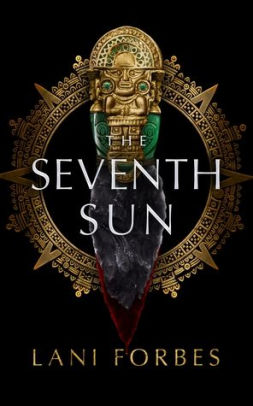
Synopsis and image are from BarnesandNoble.com.
Thank you to Edelweiss+ for the free digital ARC!

 The Book Hawk